Run/Install 3rd party applications
Armbian infrastructure services
CDN router
Router for repository mirror automation

The Armbian Router is an intelligent redirector system that optimizes file downloads by automatically directing users to the best available mirror. It evaluates each download request based on geographic location, server health, and file availability, ensuring faster downloads, balanced load distribution, and high availability. This core service underpins Armbian’s scalable mirror network, seamlessly routing traffic to improve performance and reliability for end users worldwide.
| CDN router | |
|---|---|
| Remove CDN router | |
|---|---|
GH runners
GitHub runners for Armbian automation

This module automates the installation, removal, and status checking of GitHub self-hosted runners for the Armbian project. It supports batch operations and user input through dialog prompts when running interactively.
| GH runners | |
|---|---|
install
Installs one or more GitHub runners using the provided configuration or interactively prompted values.
purge/remove
Removes runners based on the provided runner name series and target organization or repository.
status
Quietly checks if anyactions.runnerservices are currently running on the system.
| Switch | Description |
|---|---|
gh_token |
GitHub token with admin rights to manage self-hosted runners. |
runner_name |
Name prefix for the runner series (default: armbian). |
start |
Start index of the runner series (e.g., 01). |
stop |
End index of the runner series (e.g., 05). |
label_primary |
Labels for the first runner (default: alfa). |
label_secondary |
Labels for additional runners (default: fast,images). |
organisation |
GitHub organization name (default: armbian). |
owner |
GitHub user or organization owner (used for repo-level runners). |
repository |
GitHub repository name (used for repo-level runners). |
- Prompts the user for missing switches via
dialogonly in interactive mode. - Supports bulk installation of runners using sequential numbering (
starttostop). - Calls internal
actions.runner.installandactions.runner.removehelpers. - Returns
0if any runner services are active,1otherwise (for scripting use). - Suppresses errors and outputs when checking status to remain quiet in background use.
| Remove GitHub runners for Armbian automation | |
|---|---|
Rsyncd server

| Rsyncd server | |
|---|---|
| Remove Armbian rsyncd server | |
|---|---|
Backup solutions for your data
Duplicati
Duplicati install

Duplicati is a versatile and secure backup tool designed for everyone, including:
- Users new to backup systems who need a simple and reliable solution.
- Experienced users who want full control over encrypted backups and storage destinations.
- System administrators who require automated, encrypted backups across multiple platforms.
Duplicati offers powerful features such as strong AES-256 encryption, backup scheduling, and flexible storage support (local folders, NAS, cloud providers like Google Drive, Dropbox, S3, and more).
Through its web-based interface, users can easily configure, monitor, and restore backups from any browser.
Thanks to Duplicati’s smart design — working through standard protocols and containerized deployment — it fits seamlessly into any environment, from personal setups to enterprise infrastructures.
| Duplicati | |
|---|---|
- Install directory:
/armbian/duplicati - Configuration directory:
/armbian/duplicati/config - Backup target directory:
/armbian/duplicati/backups
| Bash | |
|---|---|
| Duplicati remove | |
|---|---|
| Duplicati purge with data folder | |
|---|---|
Docker containerization and KVM virtual machines
Docker

| Docker | |
|---|---|
What is Docker? Docker helps developers build, share, run, and verify applications anywhere - without tedious environment configuration or management.
| Docker remove | |
|---|---|
| Docker purge with all images, containers, and volumes | |
|---|---|
Portainer
Portainer container management platform

Portainer simplifies your Docker container management via Portainer web interface. It enables faster deploy of the applications and it gives real time visibility.
| Portainer | |
|---|---|
| Portainer remove | |
|---|---|
| Portainer purge with with data folder | |
|---|---|
Network-wide ad blockers servers
AdGuardHome
AdGuardHome DNS sinkhole

AdGuard Home is a network-wide software that functions as a DNS server and ad blocker. It blocks ads, trackers, and malicious websites at the DNS level, meaning it filters content for all devices connected to the network. It also provides additional features like parental controls, logging, and privacy protections. Essentially, it acts as a gateway between your devices and the internet, blocking unwanted content before it even reaches your devices.
| AdGuardHome | |
|---|---|
- Username/Password: admin / generate at first web interface login
- Install directory:
/armbian/adguardhome/ - Configuration directory:
/armbian/adguardhome/confdir - Work directory:
/armbian/adguardhome/workdir
- server where you are installing is automatically switched to this DNS
- on your desktop PC set IP address of this server as DNS
- network wide: set IP address of this server on routers DNS
There are many sites in the web giving blocklists and whitelists for AdGuard Home. They can be used when you want to have more blocking as the standard installation gives you. Here are some examples:
| Bash | |
|---|---|
| AdGuardHome remove | |
|---|---|
| AdGuardHome purge with data folder | |
|---|---|
Pi-hole
Pi-hole DNS ad blocker with Unbound support

Pi-hole is a network-wide ad blocker that acts as a DNS (Domain Name System) sinkhole. It blocks connections to known ad servers, trackers, and malicious domains across all devices in your network, without requiring any browser extensions or client-side software.
Pi-hole Explained
- DNS-Based Filtering Pi-hole intercepts DNS queries made by devices on your network. When a domain is requested, Pi-hole checks it against a set of blocklists. If the domain is known to serve ads or track user activity, Pi-hole blocks the request, preventing unwanted content from loading.
- Customizable Blocklists You can choose from various community-maintained blocklists or add your own. These lists contain domains associated with ads, trackers, malware, or other undesirable content.
- Whole-Network Protection Once Pi-hole is configured as your network’s DNS server, all devices - smartphones, laptops, smart TVs, and IoT devices - are automatically protected. No additional configuration or software is required on the individual devices.
- Built-in Recursive DNS with Unbound For added privacy and full DNS resolution control, Unbound is installed and enabled by default during Pi-hole installation. Unbound functions as a local recursive DNS resolver, fetching responses directly from authoritative DNS servers rather than relying on upstream providers. This minimizes third-party exposure and can improve query performance.
- Web Interface Pi-hole includes a web-based dashboard that provides real-time visibility into DNS activity. The interface allows you to view statistics, manage blocklists, whitelist domains, and configure settings with ease.
- Privacy and Performance Benefits By blocking unwanted domains at the DNS level, Pi-hole reduces page load times, lowers bandwidth usage, and enhances user privacy by preventing tracking scripts and ads from reaching client devices.
- Platform Compatibility Pi-hole can be installed on a variety of platforms. It runs well on lightweight systems such as Armbian Minimal, but is also available as a Docker container and supports deployment on most Linux-based environments.
Pi-hole offers an effective and centralized way to enhance privacy and reduce unwanted content across your entire network.
| Pi-hole | |
|---|---|
- Password is set on install and can be adjusted from
armbian-config
| Pi-hole change web admin password | |
|---|---|
| Pi-hole remove | |
|---|---|
| Pi-hole purge with data folder | |
|---|---|
Unbound
Unbound caching DNS resolver

Unbound is a high-performance, open-source DNS resolver. It primarily serves to resolve domain names into IP addresses for devices on a network. Unlike regular DNS servers, Unbound performs DNS lookups directly and securely, providing features like DNSSEC validation (ensuring data integrity) and privacy protections. It’s often used to improve speed, security, and privacy by resolving queries locally rather than relying on external DNS services.
| Unbound | |
|---|---|
- Default DNS port: 8053
- Install directory:
/armbian/unbound/ - Configuration directory:
/armbian/unbound/
| Bash | |
|---|---|
| Unbound remove | |
|---|---|
| Unbound purge with data folder | |
|---|---|
SQL database servers and web interface managers
MySQL
MySQL SQL database server

MySQL is one of the world’s most widely used open-source database servers. Trusted for decades in web, cloud, and enterprise applications.
| MySQL | |
|---|---|
Database access configuration is done at first install:
- create root password
- create database
- create normal user
- create password for normal user
- Database host:
<your.IP>
- Install directory:
/armbian/mysql - Data volume mounted to:
/armbian/mysql/data
| Bash | |
|---|---|
| MySQL remove | |
|---|---|
| MySQL purge with data folder | |
|---|---|
Mariadb
Mariadb SQL database server

MariaDB is a fast, open-source relational database server developed by the original creators of MySQL. It is designed to be fully compatible with MySQL while offering improved performance, enhanced security, and additional features.
MariaDB supports a wide range of storage engines, advanced SQL capabilities, and both single-node and clustered deployments. It is widely used in web, cloud, and
| Mariadb | |
|---|---|
Database access configuration is done at first install: - create root password - create database - create normal user - create password for normal user
- Database host:
<your.IP>:3307
- Install directory:
/armbian/mariadb - Site configuration directory:
/armbian/mariadb/config
| Bash | |
|---|---|
| Mariadb remove | |
|---|---|
| Mariadb purge with data folder | |
|---|---|
phpMyAdmin
phpMyAdmin web interface manager

| phpMyAdmin | |
|---|---|
| phpMyAdmin remove | |
|---|---|
| phpMyAdmin purge with data folder | |
|---|---|
PostgreSQL
PostgreSQL install

PostgreSQL is a powerful, open-source object-relational database system known for its robustness, feature richness, and reliability.
It is designed for everyone, including:
- Developers needing advanced SQL support and extensibility.
- System administrators requiring reliable data storage for mission-critical applications.
- Enterprises seeking a high-performance, standards-compliant relational database.
PostgreSQL offers strong ACID compliance, concurrency, rich data types, full-text search, JSON support, and extensibility through stored procedures and custom functions.
It is trusted globally in financial, government, and web-scale applications.
Thanks to its proven architecture and open-source nature, PostgreSQL fits seamlessly in projects of all sizes.
| PostgreSQL | |
|---|---|
- Default user:
armbian - Default password:
armbian - Default database:
armbian
- Data directory:
/armbian/postgres/data
| Bash | |
|---|---|
| PostgreSQL remove | |
|---|---|
| PostgreSQL purge with data folder | |
|---|---|
Redis
Redis install

Redis is an open-source, in-memory data structure store, used as a database, cache, and message broker.
It supports a variety of data structures such as strings, hashes, lists, sets, and sorted sets.
Key Features: - Extremely fast performance with in-memory storage - Persistence options (snapshotting and AOF) - Pub/Sub messaging capabilities - Built-in replication and high availability - Simple API and wide client support
Redis is widely used for real-time applications, caching layers, session stores, and lightweight queues across industries and platforms.
| Redis | |
|---|---|
- Data directory:
/armbian/redis/data
| Bash | |
|---|---|
| Redis remove | |
|---|---|
| Redis purge with data folder | |
|---|---|
Applications and tools for development
Git CLI
Install tools for cloning and managing repositories (git)
| Git CLI | |
|---|---|
| Remove tools for cloning and managing repositories (git) | |
|---|---|
Code-server
Code-server VS Code in browser

Code-server is VS Code running on a remote server, accessible through the browser. This brings the full power of Visual Studio Code to any device with a web browser, eliminating the need for local installations while maintaining a consistent development environment across all your devices.
Built on the VS Code open-source base, code-server provides enterprise-grade remote development capabilities with the familiar VS Code interface. It’s maintained by LinuxServer.io and optimized for containerized deployments, making it perfect for development on ARM devices, cloud servers, or homelab environments.
Key Features
- Full VS Code Experience: Complete access to the VS Code extension marketplace, themes, and settings
- Browser-Based Access: Development environment available from Chrome, Firefox, Safari, or Edge
- Resource Efficiency: Offload compilation and development tasks to more powerful servers
- Persistent Workspaces: All settings, extensions, and files saved across sessions
- Multi-User Support: Each container provides an isolated development environment
- SSH Integration: Built-in terminal for direct server access and command-line operations
- Extension Marketplace: Install thousands of VS Code extensions for any language or framework
- Cross-Platform: Develop from Windows, Mac, Linux, iOS, or Android devices
Perfect for developers working on ARM-based SBCs, cloud instances, or homelab servers who need a consistent, powerful development environment accessible from anywhere.
| Code-server | |
|---|---|
- Default Login: No password required by default (see optional variables below)
Note: Code-server uses HTTPS with a self-signed certificate by default. Your browser may show a security warning - this is normal for self-signed certificates.
- Install directory:
/armbian/code-server - Configuration directory:
/armbian/code-server/config
You can customize code-server by passing additional environment variables:
- PASSWORD - Set a simple password for web UI access (not recommended for production)
- HASHED_PASSWORD - Set a hashed password for enhanced security (recommended)
- SUDO_PASSWORD - Set a password for sudo access within code-server terminal
- PROXY_DOMAIN - Configure proxy domain for reverse proxy setups
- DEFAULT_WORKSPACE - Set the default workspace directory
- PWA_APPNAME - Customize the PWA (Progressive Web App) name
To add these variables, edit the container and restart:
| Bash | |
|---|---|
To generate a hashed password for the HASHED_PASSWORD variable:
| Bash | |
|---|---|
- Browser shows certificate warning: Accept the security warning to proceed (self-signed certificate)
- Cannot access web UI: Check if port 8443 is open in your firewall
- Extensions not installing: Check internet connectivity from the container
- Slow performance: Consider increasing Docker resource limits
| Code-server remove | |
|---|---|
| Code-server purge with data folder | |
|---|---|
Download apps for movies, TV shows, music and subtitles
Bazarr
Bazarr automatic subtitles downloader for Sonarr and Radarr

Bazarr is a companion application to Sonarr and Radarr. It can manage and download subtitles based on your requirements. You define your preferences by TV show or movie and Bazarr takes care of everything for you.
| Bazarr | |
|---|---|
- Username/Password: admin / generate at first web interface login
- Install directory:
/armbian/bazarr - Site configuration directory:
/armbian/bazarr/config - Download directory:
/armbian/bazarr/movies/armbian/bazarr/tv
| Bash | |
|---|---|
| Bazarr remove | |
|---|---|
| Bazarr purge with data folder | |
|---|---|
Deluge
Deluge BitTorrent client

Deluge is a lightweight, Free Software, cross-platform BitTorrent client.
| Deluge | |
|---|---|
- Username/Password: default user/password of admin/deluge
- Install directory:
/armbian/deluge - Site configuration directory:
/armbian/deluge/config - Download directory:
/armbian/deluge/downloads
| Bash | |
|---|---|
| Deluge remove | |
|---|---|
| Deluge purge with data folder | |
|---|---|
qBittorrent
qBittorrent BitTorrent client

The Qbittorrent project aims to provide an open-source software alternative to µTorrent. qBittorrent is based on the Qt toolkit and libtorrent-rasterbar library.
| qBittorrent | |
|---|---|
- Username/Password: admin / generate at first web interface login
- Install directory:
/armbian/qbittorrent - Site configuration directory:
/armbian/qbittorrent/config - Download directory:
/armbian/qbittorrent/downloads
| Bash | |
|---|---|
| qBittorrent remove | |
|---|---|
| qBittorrent purge with data folder | |
|---|---|
Prowlarr
Prowlarr index manager and proxy for PVR

Prowlarr is a indexer manager/proxy built on the popular arr .net/reactjs base stack to integrate with your various PVR apps. Prowlarr supports both Torrent Trackers and Usenet Indexers. It integrates seamlessly with Sonarr, Radarr, Lidarr, and Readarr offering complete management of your indexers with no per app Indexer setup required (we do it all).
| Prowlarr | |
|---|---|
- Username/Password: admin / generate at first web interface login
- Install directory:
/armbian/prowlarr - Site configuration directory:
/armbian/prowlarr/config
| Bash | |
|---|---|
| Prowlarr remove | |
|---|---|
| Prowlarr purge with data folder | |
|---|---|
Jellyseerr
Jellyseerr Jellyfin/Emby/Plex integration install

Jellyseerr is a free and open source software application for managing requests for your media library. It is a fork of Overseerr built to bring support for Jellyfin & Emby media servers!
| Jellyseerr | |
|---|---|
| Jellyseerr remove | |
|---|---|
| Jellyseerr purge with data folder | |
|---|---|
Lidarr
Lidarr automatic music downloader

Lidarr is a music collection manager for Usenet and BitTorrent users. It can monitor multiple RSS feeds for new tracks from your favorite artists and will grab, sort and rename them. It can also be configured to automatically upgrade the quality of files already downloaded when a better quality format becomes available.
| Lidarr | |
|---|---|
- Username/Password: admin / generate at first web interface login
- Install directory:
/armbian/lidarr - Site configuration directory:
/armbian/lidarr/config - Download directory:
/armbian/lidarr/downloads/armbian/lidarr/music
| Bash | |
|---|---|
| Lidarr remove | |
|---|---|
| Lidarr purge with data folder | |
|---|---|
Medusa
Medusa automatic downloader for TV shows

Medusa is an automatic Video Library Manager for TV Shows. It watches for new episodes of your favorite shows, and when they are posted it does its magic.
| Medusa | |
|---|---|
- Install directory:
/armbian/medusa - Site configuration directory:
/armbian/medusa/config - Download directory:
/armbian/medusa/downloads - Download directory TV shows:
/armbian/medusa/downloads/tv
| Bash | |
|---|---|
| Medusa TV shows downloader remove | |
|---|---|
| Medusa TV shows downloader purge | |
|---|---|
Radarr
Radarr automatic downloader for movies

Radarr - A fork of Sonarr to work with movies à la Couchpotato.
| Radarr | |
|---|---|
- Username/Password: admin / generate at first web interface login
- Install directory:
/armbian/radarr - Site configuration directory:
/armbian/radarr/config - Download directory:
/armbian/radarr/movies - Client download directory:
/armbian/radarr/client
| Bash | |
|---|---|
| Radarr remove | |
|---|---|
| Radarr purge with data folder | |
|---|---|
SABnzbd
SABnzbd newsgroup downloader

Sabnzbd makes Usenet as simple and streamlined as possible by automating everything we can. All you have to do is add an .nzb. SABnzbd takes over from there, where it will be automatically downloaded, verified, repaired, extracted and filed away with zero human interaction.
| SABnzbd | |
|---|---|
- Username/Password: admin / generate at first web interface login
- Install directory:
/armbian/sabnzbd - Site configuration directory:
/armbian/sabnzbd/config - Download directory:
/armbian/sabnzbd/downloads - Incomplete downloads:
/armbian/sabnzbd/incomplete
| Bash | |
|---|---|
| SABnzbd remove | |
|---|---|
| SABnzbd purge with data folder | |
|---|---|
Sonarr
Sonarr automatic downloader for TV shows

Sonarr (formerly NZBdrone) is a PVR for usenet and bittorrent users. It can monitor multiple RSS feeds for new episodes of your favorite shows and will grab, sort and rename them. It can also be configured to automatically upgrade the quality of files already downloaded when a better quality format becomes available.
| Sonarr | |
|---|---|
- Install directory:
/armbian/sonarr - Site configuration directory:
/armbian/sonarr/config - Download directory:
/armbian/sonarr/tvseries - Client download directory:
/armbian/sonarr/client
| Bash | |
|---|---|
| Sonarr remove | |
|---|---|
| Sonarr purge with data folder | |
|---|---|
Transmission
Transmission BitTorrent client

Transmission is designed for easy, powerful use. Transmission has the features you want from a BitTorrent client: encryption, a web interface, peer exchange, magnet links, DHT, µTP, UPnP and NAT-PMP port forwarding, webseed support, watch directories, tracker editing, global and per-torrent speed limits, and more.
| Transmission | |
|---|---|
- Username/Password: admin / generate at first web interface login
- Install directory:
/armbian/transmission - Site configuration directory:
/armbian/transmission/config - Download directory:
/armbian/transmission/downloads - Watch directory:
/armbian/transmission/watch
| Bash | |
|---|---|
| Transmission remove | |
|---|---|
| Transmission purge with data folder | |
|---|---|
Manage your finances
Actual Budget
Do your finances with Actual Budget

Actual Budget is a free, open-source personal finance app built around the envelope budgeting method.
- Privacy-focused: Users can self-host their data or use encrypted cloud syncing.
- Key Features:
- Multi-account tracking
- Transaction importing
- Customizable financial reports
- Optional syncing via services like PikaPods
- Ideal for: Those who want a transparent, self-hosted alternative to proprietary budgeting tools.
| Actual Budget | |
|---|---|
Warning: HTTPS Certificate Required
After initially installing the Actual server, you might get stuck at the step:
“Initializing the connection to the local database…”
The issue is due to the server not having an HTTPS certificate.
After activating an HTTPS certificate for the Actual server, everything should work fine.
If you still encounter issues even after setting up HTTPS, we highly recommend reaching out to the Actual Budget Discord server — the developers and community there are very kind and helpful.
| Actual Budget remove | |
|---|---|
| Actual Budget purge with data folder | |
|---|---|
Wallos
Install Wallos subscription tracker

Wallos is a self-hosted finance tracker and subscription management application. It helps you monitor recurring expenses, track subscriptions, and manage your financial commitments in one centralized location. With Wallos, you can visualize spending patterns, set renewal reminders, and take control of your recurring payments.
This Docker-based application runs as a lightweight web service, providing an intuitive interface for managing all your subscriptions and recurring expenses. The data is stored locally in SQLite database, ensuring your financial information remains private and under your control.
Subscription Tracking
- Add and manage all your subscriptions (Netflix, Spotify, cloud services, etc.)
- Track monthly, yearly, or one-time payments
- Categorize expenses by type (streaming, software, utilities, etc.)
- Set custom renewal dates and reminders
Financial Overview
- Visual dashboard showing total monthly/yearly expenses
- Breakdown by category and service provider
- Currency conversion support for international subscriptions
- Export data to CSV for further analysis
Data Management
- Upload custom logos for service providers
- Local SQLite database storage (no cloud dependency)
- Automatic backups through Docker volume mounts
- Import/export functionality for data portability
Once installed, access Wallos by navigating to:
On first access, you’ll be guided through the initial setup: 1. Create your admin account 2. Configure currency preferences 3. Set up default categories 4. Start adding subscriptions
Wallos data is stored in Docker volumes for persistence:
- Database volume:
/var/www/html/db→ stored at${config_dir}/db - Logos volume:
/var/www/html/images/uploads/logos→ stored at${config_dir}/logos
Container won’t start
- Check port conflicts:
docker ps -a | grep wallos - Verify volume mounts exist and have correct permissions
- Review logs:
docker logs wallos
Cannot access web interface
- Confirm container is running:
docker ps | grep wallos - Check firewall rules allow port 8282
- Verify correct IP address if accessing remotely
Data loss after restart
- Ensure Docker volumes are properly mounted
- Check that persistence directories are not cleaned on reboot
- Verify backup of
${config_dir}before making changes
| Bash | |
|---|---|
| Wallos | |
|---|---|
Key Use Cases
Personal Finance Management
- Subscription Awareness: Track all recurring payments in one place
- Budget Planning: See exactly how much you spend monthly on subscriptions
- Renewal Reminders: Never miss a payment or forget to cancel unwanted services
- Cost Optimization: Identify unused or redundant subscriptions to cancel
Family Finance
- Shared Dashboard: Multiple family members can access the same instance
- Categorization: Organize expenses by person or category
- Total Visibility: Get a complete picture of household recurring expenses
Small Business
- Service Tracking: Monitor software subscriptions, SaaS tools, and business services
- Expense Categorization: Separate personal and business subscriptions
- Financial Planning: Forecast recurring costs for better budget management
| Remove Wallos | |
|---|---|
| Purge Wallos | |
|---|---|
Home Automation for control home appliances
Domoticz
Domoticz open source home automation

Domoticz is an open-source home automation platform that allows you to control and monitor smart devices in your home. It supports a wide range of devices, including lights, sensors, thermostats, and cameras. Through its web interface or mobile app, you can set up automation rules and schedules, providing greater convenience and energy efficiency. It’s customizable, flexible, and can be run on a variety of hardware platforms supported by Armbian.
- Username/Password: admin / domoticz
- Config directory:
/armbian/domoticz
- Primary USB device passing through (
/dev/ttyUSB0) to Docker container is enabled by default - For more complex setup, please follow this comprehensive guide: https://wiki.domoticz.com/Main_Page
| Domoticz | |
|---|---|
| Domoticz remove | |
|---|---|
| Domoticz purge with data folder | |
|---|---|
EVCC
EVCC - solar charging automation

evcc is an energy management system with a focus on electromobility. The software controls your EV charger or smart plug. It communicates with your vehicle, inverter or home storage to make intelligent charging decisions. The software is open source and community-driven.
| EVCC | |
|---|---|
- Admin password is generated at first web interface login
- Install directory:
/armbian/evcc - Site configuration directory:
/armbian/evcc/evcc.yaml
| Bash | |
|---|---|
| EVCC - solar charging automation remove | |
|---|---|
| EVCC purge with data folder | |
|---|---|
openHAB
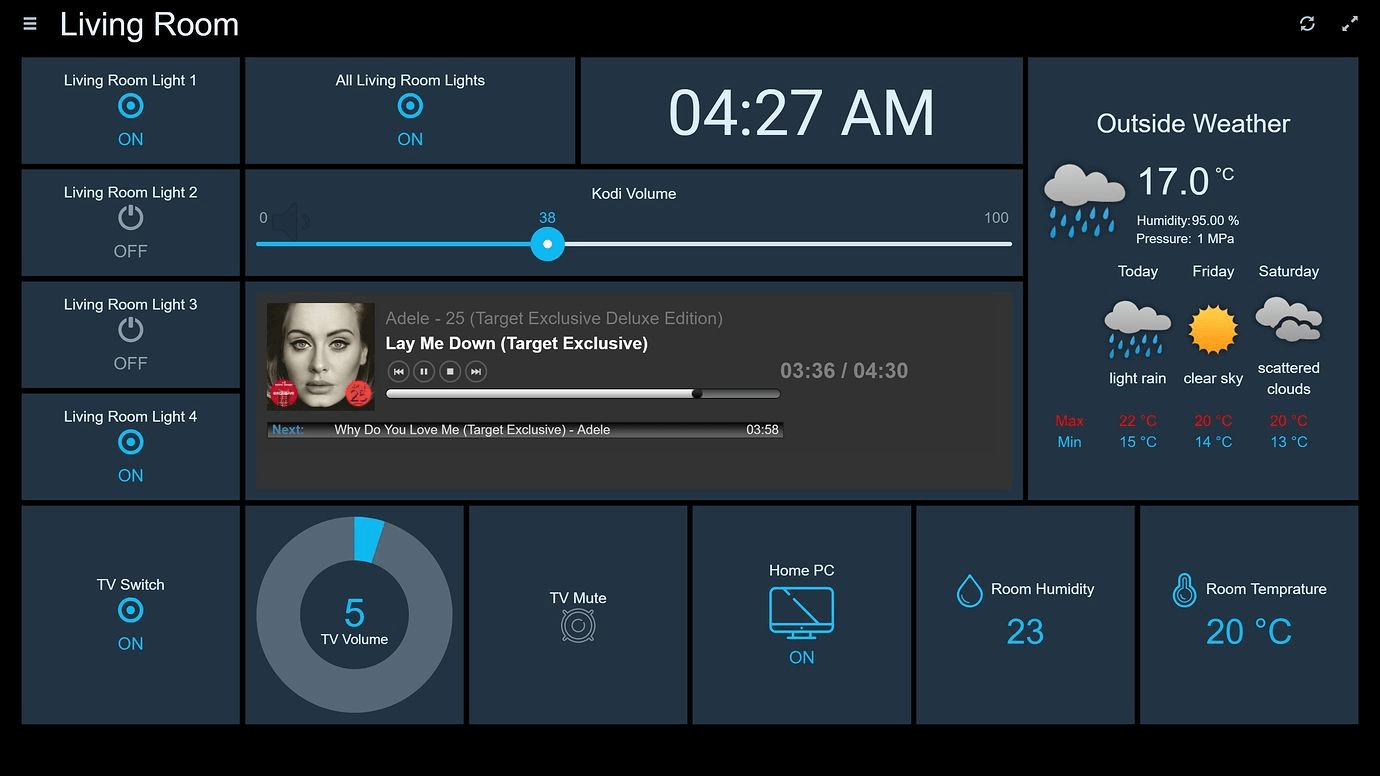
openHAB empowering the smart home
| openHAB | |
|---|---|
- Username/Password: Are set at first web interface login
- Install directory:
/armbian/openhab - Site configuration directory:
/armbian/openhab/conf - Userdata directory:
/armbian/openhab/userdata - Addons directory:
/armbian/openhab/addons
See also openHAB file locations.
| Bash | |
|---|---|
| openHAB remove | |
|---|---|
| openHAB purge with data folder | |
|---|---|
Home Assistant
Home Assistant open source home automation
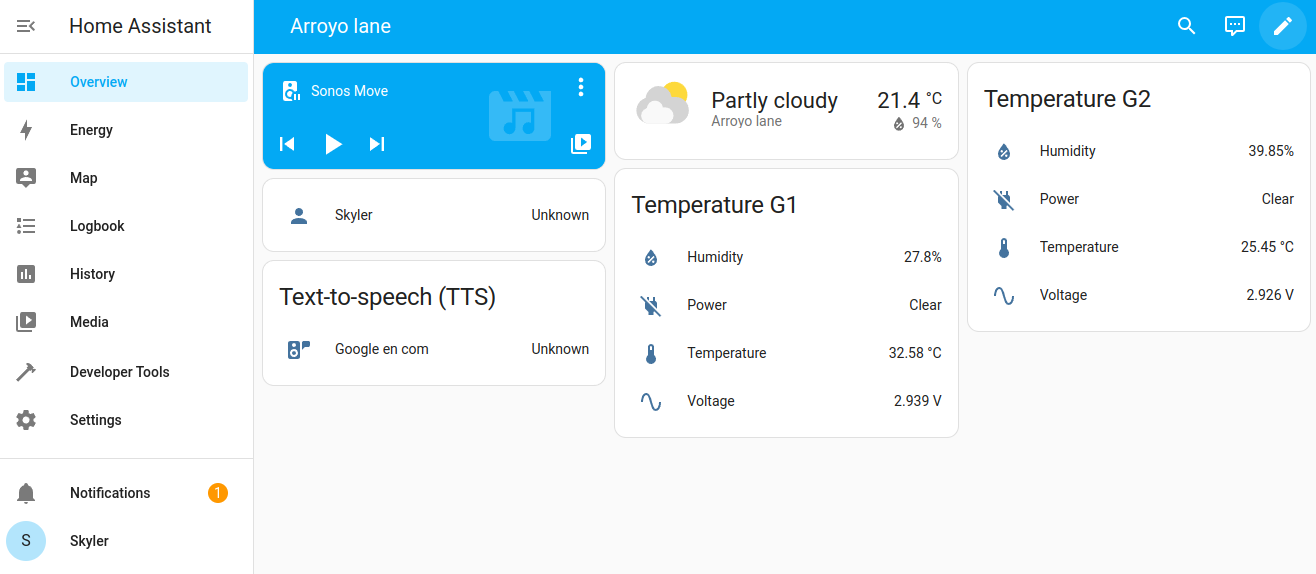
Home Assistant is an open source smart home platform that allows you to connect your smart home devices like your TV, fan, cameras, thermostats, lights, and sensors. As a user, you can build intricate automation using Home Assistant’s user-friendly, unified web-based user interface.
Perfect to run on any single board computer with 4 cores and at least 512Mb of memory. Armbian installation is optimised to run from SD/eMMC media, but it is recommended to use SSD.
Limited support
The supervised installation method on Armbian is not officially supported by the Home Assistant project. Additionally, installation on hardware that is not officially supported is also outside the scope of support provided by the Armbian team.
You are welcome to report high-level application issues that are reproducible on the official Home Assistant Operating System (HAOS) within the Home Assistant Community. For any topics related to single-board computer hardware, you may use the Armbian Community Forums; however, please be aware that official support from the Armbian team is not guaranteed.
While the Home Assistant team deprecated the Supervised installation method, the Armbian team will continue to provide and maintain it, as long as automated installation tests succeed and the required maintenance remains manageable.
| Home Assistant | |
|---|---|
- Username/Password: Are set at first web interface login
Home Assistant on Armbian runs supervised in a Docker container. This secures same functionality as stock HAOS.
- Config directory:
/armbian/haos
| Functionality | HAOS | Armbian with HA |
|---|---|---|
| Automations |  |
|
| Dashboards | |
|
| Integrations | |
|
| Add-ons | |
|
| One-click updates | |
|
| Backups | |
|
| General purpose server |  |
 |
| Running on exotic hardware | |
|
| Home Assistant remove | |
|---|---|
| Home Assistant purge with data folder | |
|---|---|
Remote File & Management tools
Cockpit
Cockpit OS and VM management tool

Cockpit is a web-based graphical interface for servers, intended for everyone.
Here’s a subset of tasks you can perform on each host running Cockpit
- inspect and change network settings
- configure a firewall
- manage storage (including RAID and LUKS partitions)
- create and manage virtual machines
- download and run containers
- browse and search system logs
- inspect a system’s hardware
- upgrade software
- manage user accounts
- inspect and interact with systemd-based services
- use a terminal on a remote server in your local web browser
- switch between multiple Cockpit servers
| Cockpit | |
|---|---|
- Username/Password: your system login credentials
| Remove Cockpit | |
|---|---|
| Purge Cockpit with virtual machines | |
|---|---|
Proxmox VE
Proxmox VE virtualization platform (keeps the Armbian kernel)

Proxmox VE is a complete, open-source server virtualization platform for running KVM virtual machines and LXC containers from a single, integrated web interface. It combines the tooling for compute, storage and software-defined networking so you can manage a whole host — or a cluster of them — from your browser.
This module installs Proxmox VE 9 from the official no-subscription repository on Debian 13 (trixie), on both amd64 and arm64, and — unlike the upstream guide — keeps the running Armbian kernel instead of pulling the Proxmox one.
Key Features
- KVM virtual machines: Full hardware-accelerated VMs via the board’s KVM-enabled Armbian kernel.
- LXC containers: Lightweight, fast system containers alongside your VMs.
- Web management: Manage guests, storage, backups and networking from
https://<ip>:8006. - ZFS storage: Installs ZFS (via DKMS, built against the Armbian kernel) so you can create ZFS pools and datasets for VM/container storage.
- Keeps your kernel: Installs
pve-manager(no kernel dependency) rather than theproxmox-vemeta, so your Armbian kernel and DTBs stay in place. - No subscription needed: Uses the public
pve-no-subscriptionrepository.
Ideal for turning an Armbian board into a lightweight hypervisor without giving up the board’s own kernel and hardware support.
| Proxmox VE | |
|---|---|
- Username:
root(your system root password)
Official documentation: https://pve.proxmox.com/pve-docs/
This install intentionally omits the Proxmox kernel and runs on the board’s Armbian kernel:
- KVM virtual machines and LXC containers work provided the running kernel
offers the needed support (KVM /
/dev/kvmand container cgroups/namespaces) — which the Armbian kernels for these arches normally do. - This module installs ZFS for you (via DKMS, built against the Armbian kernel), so ZFS storage pools work out of the box; only ZFS-on-root (boot) is out of scope.
- Armbian Trixie (Debian 13) on amd64 or arm64 (enforced by the installer).
-
Recommended: the hostname should resolve to a non-loopback IP in
/etc/hosts, e.g.:Text Only If it resolves only to a loopback address (
127.xor IPv6::1), the installer warns and lets you continue, but the web UI and clustering may not work until you fix/etc/hosts.
- Configuration:
/etc/pve - Cluster data:
/var/lib/pve-cluster
| Remove Proxmox VE | |
|---|---|
| Purge Proxmox VE with cluster data | |
|---|---|
Homepage
Install Homepage startpage / application dashboard

gethomepage is a fast, fully static, highly customizable application dashboard built for modern self-hosted environments. With a fully proxied architecture and zero runtime, it delivers exceptional speed, security, and simplicity for organizing and accessing your services.
It supports over 100 service integrations and multiple languages, offering live status displays and dynamic resource monitoring out-of-the-box. Configuration is effortless via YAML files or automatic Docker label discovery, making setup and management seamless.
Key Features
- Static Frontend: Blazing-fast performance with no server-side runtime.
- Secure Proxying: Safely access internal services without direct exposure.
- Service Integrations: Native support for Docker, Kubernetes, Grafana, Proxmox, Home Assistant, and more.
- Easy Configuration: Manage layout and services with YAML or Docker labels.
- Internationalization: Translations available for multiple languages.
- Flexible Theming: Personalize with themes, layouts, and styling.
- Simple Deployment: Host via Docker, Kubernetes, or any static hosting platform.
Whether you’re running a small homelab or a full server fleet, gethomepage offers a sleek, powerful, and secure way to stay organized.
| Homepage | |
|---|---|
- Username/Password: none
Configuration: Please reffer to official manual https://gethomepage.dev/configs/
- Install directory:
/armbian/homepage - Site configuration directory:
/armbian/homepage/config
| Bash | |
|---|---|
| Remove Homepage | |
|---|---|
| Purge Homepage with data folder | |
|---|---|
NetBox
NetBox infrastructure resource modeling install

NetBox is an open-source infrastructure resource modeling (IRM) tool used for managing and documenting networks and data center assets.
Requirements (installed automatically)
Key Features
- IP Address Management (IPAM): Track IP networks, addresses, and VRFs.
- Data Center Infrastructure Management (DCIM): Model racks, devices, connections, and more.
- Secrets Management: Securely store credentials and other sensitive data.
- Extensible API & Webhooks: Integrate with external systems.
- Custom Fields & Scripts: Tailor NetBox to fit your organization’s needs.
Originally developed by DigitalOcean, NetBox is widely adopted by network engineers and sysadmins to maintain source-of-truth data for automation.
| NetBox | |
|---|---|
| NetBox remove | |
|---|---|
| NetBox purge with data folder | |
|---|---|
apt-cacher-ng
apt-cacher-ng caching proxy install

apt-cacher-ng is a caching HTTP proxy for Debian and Ubuntu apt repositories. The first host on the LAN to fetch a .deb populates the cache; every subsequent apt-get install / apt-get dist-upgrade on any other host serves the same package from local disk — saving WAN bandwidth and turning multi-minute upgrades into seconds.
Key Features
- Transparent HTTP proxy in front of
deb.debian.org/archive.ubuntu.com/ vendor mirrors - Single-port (
3142), single-container deployment - Per-package hit-rate report at
/acng-report.html - Survives container restart — cache lives on a host bind-mount
| apt-cacher-ng | |
|---|---|
| apt-cacher-ng remove | |
|---|---|
| apt-cacher-ng purge with cache folder | |
|---|---|
git_cdn
git_cdn GitHub caching proxy install

| git_cdn | |
|---|---|
| git_cdn remove | |
|---|---|
| git_cdn purge with cache folder | |
|---|---|
Samba
SAMBA Remote File share

Samba is an open-source software suite that enables seamless file and printer sharing between Linux/Unix servers and Windows clients. It allows a Linux machine to act as a domain controller, file server, or print server within a Windows network environment, supporting cross-platform interoperability.
| Samba | |
|---|---|
Webmin
Webmin web-based management tool

Webmin is a web-based system administration tool for Unix-like servers. It provides an easy-to-use browser interface to manage users, configure services, edit files, monitor system performance, and control almost every aspect of your server — without needing to touch the command line.
| Webmin | |
|---|---|
- Username/Password: your system login credentials
Media servers, organizers and editors
Emby
Emby organizes video, music, live TV, and photos

Emby organizes video, music, live TV, and photos from personal media libraries and streams them to smart TVs, streaming boxes and mobile devices. This container is packaged as a standalone emby Media Server.
| Emby | |
|---|---|
- Install directory:
/armbian/emby - Site configuration directory:
/armbian/emby/config - Data directory:
/armbian/emby/tvshows/armbian/emby/movies
| Bash | |
|---|---|
| Emby server remove | |
|---|---|
| Emby server purge with data folder | |
|---|---|
Filebrowser
Filebrowser provides a web-based file manager accessible via a browser

Filebrowser is a lightweight, web-based file manager that gives you direct access to your files from any browser. It allows users to upload, delete, preview, rename, and organize files and folders — all through a clean, responsive interface.
Key Features
- Modern and intuitive web interface
- User management with role-based access
- File uploads, downloads, sharing, and previews
- Custom branding support
- Configurable directory access
- Runs as a single binary or Docker container
Official site: https://filebrowser.org
| Filebrowser | |
|---|---|
- Username/Password: admin / admin
- Install directory:
/armbian/filebrowser - Root directory:
/armbian/filebrowser/srv - Database directory:
/armbian/filebrowser/database - Configuration file:
/armbian/filebrowser/filebrowser.json - Branding directory:
/armbian/filebrowser/branding
| Bash | |
|---|---|
| Filebrowser container remove | |
|---|---|
| Filebrowser container purge with data folder | |
|---|---|
Hastebin
Hastebin Paste Server

Hastebin is a fast and simple self-hosted pastebin server. It allows users to quickly share text snippets like logs, code, or notes via a web interface or API. Hastebin is lightweight, easy to deploy with Docker, and ideal for teams needing private, temporary paste storage.
| Hastebin | |
|---|---|
| Hastebin remove | |
|---|---|
| Hastebin purge with data folder | |
|---|---|
Immich
Immich - high-performance self-hosted photo and video backup solution

Immich is a self-hosted photo and video backup solution, designed for individuals and families who want:
- An alternative to cloud-based services like Google Photos or iCloud
- A private, secure place to store, browse, and share memories
- Powerful features like automatic mobile uploads, facial recognition, and search
- A modern, responsive web and mobile interface for easy access
Thanks to Immich being built with modern technologies like NestJS, TypeScript, and machine learning integrations, users enjoy a smooth, intelligent media experience. Whether you’re a casual user backing up phone photos or a tech-savvy person managing media across multiple devices, Immich provides the flexibility and control of a cloud solution—on your own server.
Summary
- Immich is ideal if you want full privacy, open-source flexibility, and control over your data.
- Google Photos is convenient and polished but comes with trade-offs in privacy and cost at scale.
- Synology Photos fits well in homes or small offices already using Synology NAS systems, offering good performance with integrated features.
| Immich | |
|---|---|
- Email: (set during initial setup)
- Password: (set during initial setup)
- Uploads:
/armbian/immich/photos/upload/ - Thumbnails:
/armbian/immich/photos/thumbs/ - Profile images:
/armbian/immich/photos/profile/ - Library:
/armbian/immich/photos/library/ - Encoded videos:
/armbian/immich/photos/encoded-video/ - Backups:
/armbian/immich/photos/backups/
| Bash | |
|---|---|
| Feature / Aspect | Immich | Google Photos | Synology Photos |
|---|---|---|---|
| Hosting | Self-hosted | Cloud (Google infrastructure) | Self-hosted (on Synology NAS) |
| Privacy & Control | Full control, private data storage | Data stored and analyzed by Google | Full control within your NAS environment |
| Automatic Uploads | Yes (via mobile app) | Yes (via mobile app) | Yes (via mobile app or Synology Drive) |
| Facial Recognition | Yes (on-device) | Yes (cloud-based) | Yes (on-device) |
| Object & Scene Detection | Yes (limited but improving) | Yes (advanced AI) | Yes (basic) |
| Web Interface | Yes (modern and responsive) | Yes | Yes |
| Mobile Apps | Yes (iOS & Android) | Yes (iOS & Android) | Yes (iOS & Android) |
| Albums & Sharing | Yes (with public and private sharing) | Yes (advanced sharing options) | Yes |
| Multi-user Support | Yes | Limited (mostly single user) | Yes (multi-user, tied to NAS users) |
| Backup Original Quality | Yes (no compression) | Only with paid storage | Yes (NAS dependent) |
| Offline Access | Limited (depends on app setup) | Yes (with sync) | Yes |
| Open Source | Yes | No | No |
| Hardware Requirement | Any Docker-capable server or NAS | N/A (runs on Google’s cloud) | Synology NAS required |
| Price | Free (self-hosted, you pay for hardware) | Free (with limitations) / Paid for storage | Included with NAS, hardware cost required |
| Immich remove | |
|---|---|
| Immich purge with data folder | |
|---|---|
Jellyfin
Jellyfin Media System

Jellyfin is a Free Software Media System that puts you in control of managing and streaming your media. It is an alternative to the proprietary Emby and Plex, to provide media from a dedicated server to end-user devices via multiple apps. Jellyfin is descended from Emby’s 3.5.2 release and ported to the .NET Core framework to enable full cross-platform support. There are no strings attached, no premium licenses or features, and no hidden agendas: just a team who want to build something better and work together to achieve it.
| Jellyfin | |
|---|---|
- Username and password are set at first login
- Install directory:
/armbian/jellyfin - Site configuration directory:
/armbian/jellyfin/config - TV shows directory:
/armbian/jellyfin/tvseries - Movies directory:
/armbian/jellyfin/movies
| Bash | |
|---|---|
| Jellyfin remove | |
|---|---|
| Jellyfin purge with data folder | |
|---|---|
Navidrome
Navidrome music server and streamer compatible with Subsonic/Airsonic

Navidrome is a modern, lightweight, and self-hosted music server and streamer. It’s designed to be compatible with the Subsonic and Airsonic APIs, making it a drop-in replacement for users of those systems. With Navidrome, you can stream your personal music collection from anywhere using any compatible Subsonic client (mobile or desktop). It supports multi-user access, real-time updates, album artwork, and is built with performance and simplicity in mind—perfect for organizing and accessing large music libraries.
| Navidrome | |
|---|---|
| Navidrome remove | |
|---|---|
| Navidrome purge with data folder | |
|---|---|
Nextcloud
Nextcloud content collaboration platform

Nextcloud gives you access to all your files wherever you are. Where are your photos and documents? With Nextcloud you pick a server of your choice, at home, in a data center or at a provider. And that is where your files will be. Nextcloud runs on that server, protecting your data and giving you access from your desktop or mobile devices. Through Nextcloud you also access, sync and share your existing data on that FTP drive at the office, a Dropbox or a NAS you have at home.
| Nextcloud | |
|---|---|
- Username/Password: admin / generate at first web interface login
- Install directory:
/armbian/nextcloud - Site configuration directory:
/armbian/nextcloud/config - Data directory:
/armbian/nextcloud/data
| Bash | |
|---|---|
| Nextcloud remove | |
|---|---|
| Nextcloud purge with data folder | |
|---|---|
OMV
Deploy NAS using OpenMediaVault

OpenMediaVault (OMV) is a powerful, open-source network-attached storage (NAS) operating system built on the Debian Linux distribution. It is designed to provide a simple and intuitive web-based interface for managing storage devices and network services, making it ideal for home users, small offices, and even advanced users looking for a customizable and efficient NAS solution.
OMV supports a wide range of features, including various file systems (EXT4, XFS, BTRFS, etc.), software RAID configurations, scheduled backups, and user and group management. It offers support for common network protocols such as SMB/CIFS (Windows file sharing), NFS, FTP, and SSH, enabling seamless file access across different platforms.
Through its modular design, OpenMediaVault can be easily extended with plugins, allowing users to add functionality like Docker support, media servers, cloud synchronization tools, BitTorrent clients, and more. The system is designed for stability and ease of use, with regular updates and a strong community supporting development and troubleshooting.
Whether used on a dedicated server, a Raspberry Pi, or virtualized hardware, OMV provides a flexible and reliable way to build your own custom NAS.
Warning: installation works only on Debian (bookworm) based Armbian image.
| OMV | |
|---|---|
- Username/Password: admin / openmediavault (change after first login)
- Default config directory:
/etc/openmediavault/ - Shared folders base path:
/srv/dev-disk-by-.../ - Plugin data directories may vary by service (e.g., Docker, SMB, etc.)
- Use the web interface to configure storage, users, services, and plugins
- Create shared folders and enable SMB/NFS to access files over the network
- Monitor system status, performance, and logs from the dashboard
OpenMediaVault supports a wide range of community plugins:
- Docker support via
openmediavault-composeoromv-extras - Media servers (e.g., Plex, Jellyfin)
- Backup tools (e.g., rsync, USB backup)
- Cloud sync (e.g., Rclone)
Install plugins through the web interface after enabling OMV-Extras.
| OpenMediaVault remove | |
|---|---|
Owncloud
Owncloud share files and folders, easy and secure

ownCloud is a free and open-source software project for content collaboration and sharing and syncing of files in distributed and federated enterprise scenarios.
| Owncloud | |
|---|---|
- Username/Password: admin / admin
- Install directory:
/armbian/owncloud - Site configuration directory:
/armbian/owncloud/config - Data directory:
/armbian/owncloud/data
| Bash | |
|---|---|
| Owncloud remove | |
|---|---|
| Owncloud purge with data folder | |
|---|---|
Syncthing
Syncthing continuous file synchronization

Syncthing replaces proprietary sync and cloud services with something open, trustworthy and decentralized. Your data is your data alone and you deserve to choose where it is stored, if it is shared with some third party and how it’s transmitted over the Internet.
| Syncthing | |
|---|---|
- Username/Password: There is none, but it is highly suggested setting a password for this container. To do this go to Actions -> Settings -> set user/password for the webUI.
- Install directory:
/armbian/syncthing - Site configuration directory:
/armbian/syncthing/config - Data directory:
/armbian/syncthing/data1/armbian/syncthing/data2
| Bash | |
|---|---|
| Syncthing remove | |
|---|---|
| Syncthing purge with data folder | |
|---|---|
Stirling
Stirling PDF tools for viewing and editing PDF files

Stirling-PDF is a robust, locally hosted web-based PDF manipulation tool using Docker. It enables you to carry out various operations on PDF files, including splitting, merging, converting, reorganizing, adding images, rotating, compressing, and more. This locally hosted web application has evolved to encompass a comprehensive set of features, addressing all your PDF requirements.
| Stirling | |
|---|---|
- Install directory:
/armbian/stirling
| Bash | |
|---|---|
| Stirling PDF remove | |
|---|---|
| Stirling PDF purge with data folder | |
|---|---|
Real-time monitoring, collecting metrics, up-time status
Grafana
Grafana data analytics

Grafana is a multi-platform open source analytics and interactive visualization web application. It can produce charts, graphs, and alerts for the web when connected to supported data sources.
| Grafana | |
|---|---|
- Install directory:
/armbian/grafana
| Bash | |
|---|---|
| Grafana remove | |
|---|---|
| Grafana purge with data folder | |
|---|---|
NetAlertX
NetAlertX network scanner & notification framework

NetAlertX is an open-source network monitoring and intruder detection tool designed to provide visibility into your Wi-Fi or LAN network. It scans your network for connected devices and alerts you when new or unknown devices are detected, helping you monitor unauthorized access and maintain network security.
Key Features:
- Scheduled Network Scans: Regularly scans your network to detect new devices, reconnections, disconnections, and changes in IP addresses.
- Extensive Notification Support: Integrates with over 80 notification services, including email, Telegram, Pushover, and NTFY, ensuring you receive timely alerts about network changes.
- Network Visualization: Offers a user-friendly interface to visualize your entire network, enhancing security and simplifying management.
- Multi-Network Monitoring: Supports synchronization of multiple network instances, providing cross-network visibility across various device manufacturers.
- Home Assistant Integration: Seamlessly integrates with Home Assistant, enabling advanced automation workflows and smart home integrations.
- Customizable Plugins: Allows users to develop custom plugins with auto-generated user interfaces and built-in notification systems, tailoring the tool to specific network monitoring needs.
NetAlertX is actively maintained and supports various installation methods, including Docker and bare-metal setups. It serves as a proactive solution for maintaining network health and preventing issues before they escalate, providing peace of mind for individuals and small businesses alike.
For more information and installation guides, visit the official NetAlertX documentation.
| NetAlertX | |
|---|---|
- Config directory:
/armbian/netalertx/config
| Bash | |
|---|---|
| NetAlertX network scanner remove | |
|---|---|
| NetAlertX network scanner purge with data folder | |
|---|---|
Netdata
Netdata - monitoring real-time metrics

Netdata is a partially open source tool designed to collect real-time metrics, such as CPU usage, disk activity, bandwidth usage, website visits, etc., and then display them in live, easy-to-interpret charts.
| Netdata | |
|---|---|
| Netdata remove | |
|---|---|
| Netdata purge with data folder | |
|---|---|
Prometheus
Prometheus monitoring and alerting toolkit

Prometheus is an open-source monitoring and alerting toolkit designed for reliability and scalability. It collects and stores time-series data, provides powerful query capabilities, and enables real-time alerts based on defined conditions. Commonly used in cloud and containerized environments, Prometheus integrates seamlessly with Kubernetes and other modern infrastructure.
| Prometheus | |
|---|---|
- Config directory:
/armbian/prometheus
| Bash | |
|---|---|
| Prometheus remove | |
|---|---|
| Prometheus purge with data folder | |
|---|---|
Uptime Kuma
Uptime Kuma self-hosted monitoring tool

Uptime Kuma is a self-hosted monitoring tool similar to "Uptime Robot". It provides a beautiful, easy-to-use web dashboard to monitor HTTP(s), TCP, Ping, and more types of services.
You can receive instant notifications when a service goes down via Telegram, Discord, Slack, email, and many other integrations.
| Uptime Kuma | |
|---|---|
- Username/Password: Are set at first web interface login
- Monitoring uptime for HTTP(s) / TCP / HTTP(s) Keyword / HTTP(s) Json Query / Ping / DNS Record / Push / Steam Game Server / Docker Containers
- Fancy, Reactive, Fast UI/UX
- Notifications via Telegram, Discord, Gotify, Slack, Pushover, Email (SMTP), and 90+ notification services, click here for the full list
- 20-second intervals
- Multi Languages
- Multiple status pages
- Map status pages to specific domains
- Ping chart
- Certificate info
- Proxy support
- 2FA support
| Uptime Kuma remove | |
|---|---|
| Uptime Kuma purge with data folder | |
|---|---|
Dozzle
Dozzle real-time Docker log viewer

Dozzle is a lightweight, real-time Docker log viewer that provides a simple and efficient way to monitor logs from all your Docker containers. Unlike complex logging solutions, Dozzle offers a streamlined interface for viewing logs without the overhead of databases or heavy resource usage.
Key Features:
- Real-time Log Streaming: View logs from all Docker containers in real-time as they are generated, with automatic updates and scrolling.
- Search and Filtering: Quickly find specific log entries with built-in search functionality and filter containers by name or status.
- Color-Coded Log Levels: Easily identify log severity with automatic color coding for different log levels, making it simple to spot errors and warnings.
- Multi-Container View: Monitor multiple containers simultaneously with a split-screen view, allowing you to correlate events across different services.
- Responsive Web Interface: Access logs from any device with a modern, responsive web interface that works seamlessly on desktops, tablets, and mobile devices.
- Lightweight Resource Usage: Built with Go and designed for efficiency, Dozzle consumes minimal system resources compared to heavier logging solutions.
- No Authentication Required: Simple setup without complex authentication; consider securing with a reverse proxy for production environments.
Dozzle connects directly to the Docker socket to read container logs, requiring no changes to your existing containers or applications. It’s an ideal solution for developers and system administrators who need quick access to container logs without the complexity of full-scale log management systems.
For more information and usage examples, visit the official Dozzle documentation.
| Dozzle | |
|---|---|
View real-time logs from the Dozzle container:
| Bash | |
|---|---|
Dozzle does not include built-in authentication. For production use, consider:
- Running behind a reverse proxy with authentication (e.g., SWAG, Nginx)
- Using firewall rules to restrict access to trusted networks
- Configuring VPN access for remote log viewing
If Dozzle cannot display logs from certain containers:
- Ensure the Docker socket is properly mounted
- Check that the container has logs available:
docker logs <container_name> - Verify Dozzle container is running:
docker ps | grep dozzle
| Dozzle remove | |
|---|---|
| Dozzle purge | |
|---|---|
Console network tools for measuring load and bandwidth
avahi-daemon
avahi-daemon hostname broadcast via mDNS

| avahi-daemon | |
|---|---|
| avahi-daemon remove | |
|---|---|
iperf3
iperf3 bandwidth measuring tool

| iperf3 | |
|---|---|
| iperf3 remove | |
|---|---|
iptraf-ng
iptraf-ng IP LAN monitor

| iptraf-ng | |
|---|---|
| iptraf-ng remove | |
|---|---|
nload
nload - realtime console network usage monitor

| nload | |
|---|---|
| nload - remove | |
|---|---|
Tools for printing and 3D printing
OctoPrint
OctoPrint web-based 3D printers management tool

OctoPrint is an open source 3D printer controller application, which provides a web interface for the connected printers. It displays printers status and key parameters and allows user to schedule prints and remotely control the printer.
| OctoPrint | |
|---|---|
- Install directory:
/armbian/octoprint
| Bash | |
|---|---|
| OctoPrint remove | |
|---|---|
| OctoPrint purge with data folder | |
|---|---|
Virtual Private Network tools
WireGuard
WireGuard VPN server

WireGuard is an extremely simple yet fast and modern VPN that utilizes state-of-the-art cryptography. It aims to be faster, simpler, leaner, and more useful than IPsec, while avoiding the massive headache. It intends to be considerably more performant than OpenVPN. WireGuard is designed as a general purpose VPN for running on embedded interfaces and super computers alike, fit for many different circumstances. Initially released for the Linux kernel, it is now cross-platform (Windows, macOS, BSD, iOS, Android) and widely deployable. Regarded as the most secure, easiest to use, and simplest VPN solution in the industry.
| WireGuard | |
|---|---|
-
Launch
armbian-config --api module_wireguard server. -
When prompted, enter a comma-separated list of peer names (e.g., laptop,phone,router).
-
Peer configuration files will be created in
Text Only -
Scan the QR code (for mobile) or transfer .conf to your client system.
-
Connect the client using the configuration.
-
Launch
armbian-config --api module_wireguard client. -
You will be asked to edit or paste a valid WireGuard configuration.
-
Provide the client configuration in this format:
| Bash | |
|---|---|
-
The configuration will be saved to:
Text Only -
When prompted, enter the local LAN subnets you wish to route via VPN (e.g.,
10.0.10.0/24,192.168.0.0/16). -
The VPN container will be started and routing rules will be generated accordingly.
-
Routing will be restored automatically on boot via systemd service.
Remember to open/forward the port 51820 (UDP) through NAT on your router.
- Install directory:
/armbian/wireguard - Site configuration directory:
/armbian/wireguard/config
| Bash | |
|---|---|
| WireGuard VPN client | |
|---|---|
| WireGuard remove | |
|---|---|
| WireGuard VPN server QR codes for clients | |
|---|---|
| WireGuard purge with data folder | |
|---|---|
ZeroTier
ZeroTier connect devices over your own private network in the world.

| ZeroTier | |
|---|---|
Web server, LEMP, reverse proxy, Let’s Encrypt SSL
SWAG
SWAG reverse proxy
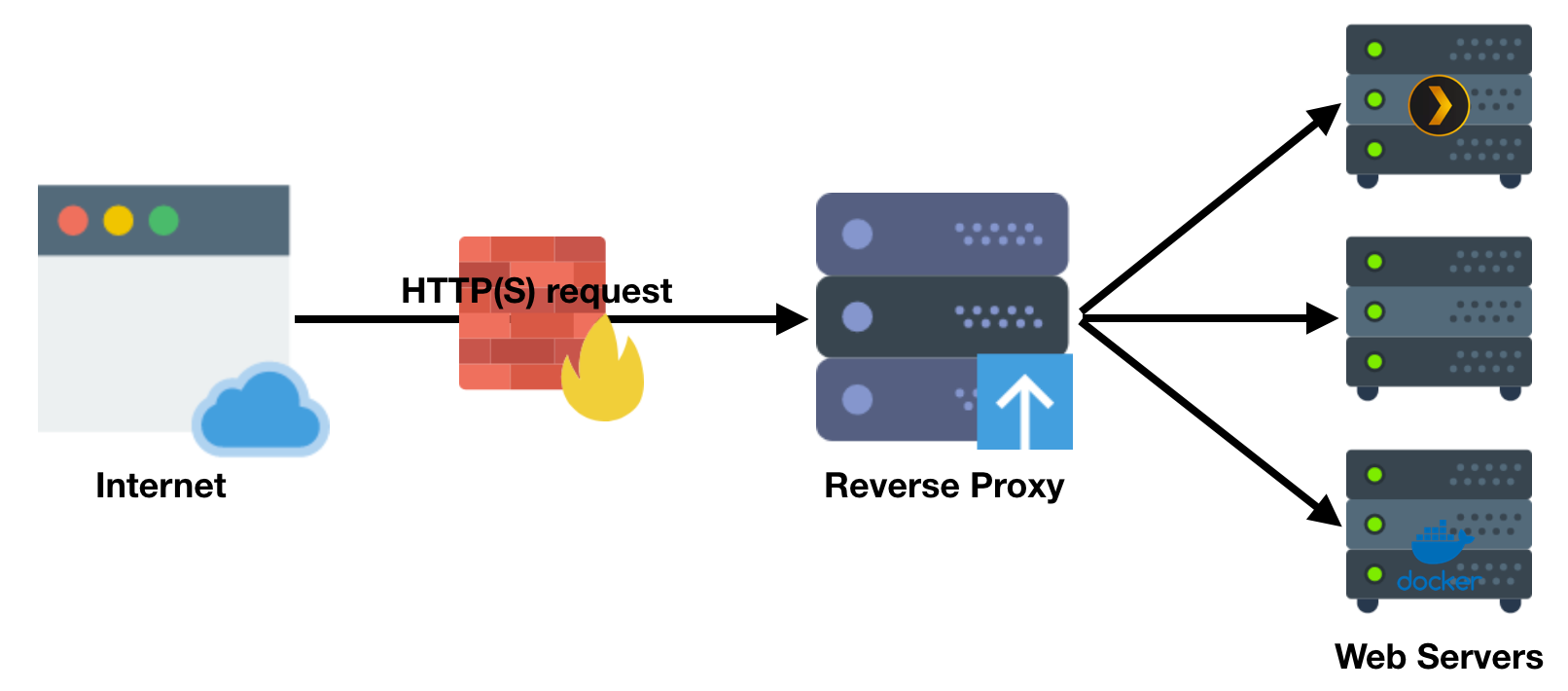
SWAG - Secure Web Application Gateway sets up an Nginx webserver and reverse proxy with php support and a built-in certbot client that automates free SSL server certificate generation and renewal processes (Let’s Encrypt). It also contains fail2ban for intrusion prevention.
After entering required information, your server will have auto updating SSL secured website! To this website you can attach several services, for example: https://my.server.com/netdata will run Netdata instance.
- this computer port 80 and 443 must be open to the internet
- your domain name (myserver.mydomain.com) DNS server should point to your router WAN address
- make sure to set additional .htpasswd username and password as you don’t want to expose your services without password
- Config directory:
/armbian/swag/config/ - Website root folder:
/armbian/swag/config/www/ - Reverse proxy configuration samples:
/armbian/swag/config/nginx/proxy-confs/
- Please follow this comprehensive guide: linuxserver/docker-swag
| SWAG | |
|---|---|
| SWAG reverse proxy .htpasswd set | |
|---|---|
| SWAG remove | |
|---|---|
| SWAG purge with data folder | |
|---|---|
Ghost
Ghost CMS install

Ghost is a powerful open-source publishing platform designed for professional publishing, newsletters, and modern blogs. It’s built on Node.js and provides a clean, fast, and customizable CMS experience.
| Ghost | |
|---|---|
Initial setup includes:
- automatic database schema setup on first run
- admin account created via web interface
- Default port:
9190 - Admin URL:
http://<your.IP>:9190/ghost(or behind reverse proxy like SWAG) - Site:
http://<your.IP>:9190
- Install directory:
/armbian/ghost
| Bash | |
|---|---|
| Ghost CMS remove | |
|---|---|
| Ghost CMS purge with data folder | |
|---|---|